

Let's be brutally honest for a second. If you're running a small business in 2026, you're probably sick of hearing about "game-changing" digital marketing strategies that require a $10,000 monthly ad budget you don't have. The noise is deafening. But here's a quiet fact that might surprise you: according to a 2025 SMB Marketing Report, 73% of small business owners who describe their marketing as "successful" spend less than $500 a month on it. The secret isn't more money. It's more focus.
I've been running a small digital agency for the last seven years, and my first clients were local bakeries, freelance consultants, and boutique shops—businesses with budgets that made you wince. We couldn't afford to spray and pray. We had to be surgical. What I learned, often through painful trial and error, is that budget constraints aren't a weakness; they're a forcing function for creativity and discipline. They make you ask the only question that matters: "Does this actually work, or is it just shiny?"
This guide is for the scrappy business owner who's ready to move past overwhelm. We're not talking about vague theories. We're talking about the specific, actionable, and—most importantly—affordable tactics you can implement next week to start seeing real traction. Forget the "ever-evolving landscape." Let's talk about the ground under your feet.
Key Takeaways
- Your greatest asset isn't your budget; it's your niche focus and your authentic voice. Leverage them relentlessly.
- Organic search (SEO) and email marketing consistently deliver the highest ROI for constrained budgets, but they require patience and consistency.
- In 2026, "community building" on one platform beats "broadcasting" on five. Choose your battlefield wisely.
- Repurposing one piece of core content into 5-7 different formats is the single most efficient marketing tactic for small teams.
- Free tools like Google Analytics 4, AnswerThePublic, and Canva are more than enough to execute a professional strategy. Don't get tool-happy.
- Measurement is non-negotiable. If you can't track it, don't do it. Focus on 2-3 key metrics that tie directly to revenue.
Mindset Before Tactics: The Scrappy Marketer's Philosophy
You can copy every tactic in this article and still fail. I've seen it happen. Why? Because the tactics are executed with a corporate, budget-flush mindset. The first and most crucial strategy is internal: adopting the scrappy marketer's philosophy.
What "Scrappy" Really Means (It's Not Just "Cheap")
Scrappy means resourcefulness over resources. It means you view every constraint—time, money, manpower—as a puzzle to solve creatively. In 2023, I worked with a local pottery studio. Their total "marketing budget" was the owner's Saturday morning. We couldn't run Pinterest ads or produce glossy video tours. So we got scrappy. We focused entirely on Instagram Stories, using her phone to show the raw, messy, beautiful process: the clay spinning, the kiln firing, the occasional cracked piece. That authenticity, born from limitation, built a loyal local following that now sells out her workshops. The tactic (Instagram Stories) was simple. The mindset (embracing the constraint to be more human) was everything.
The Rule of One: Your Antidote to Overwhelm
My biggest mistake in the early days was trying to do everything at once. The result? A half-finished blog, a stale Twitter account, and a neglected email list. Nothing gained momentum. The Rule of One is your lifeline:
- One primary marketing channel to master first.
- One core content piece per month to build everything else around.
- One key performance indicator (KPI) to obsess over per channel.
Foundation: Own Your Corner of the Internet with SEO
Paid ads stop working the second you stop paying. SEO is the closest thing to digital real estate—you build it, and it can pay rent for years. In 2026, with AI-generated content flooding the web, Google's algorithms increasingly reward what I call "Expertise Authority": content that demonstrates real, first-hand experience.

Forget Broad Terms: The Magic of Low-Competition Keywords
You will never rank for "marketing agency." A local bakery won't rank for "best cupcakes." The game is won in the long tail. My favorite free tool for this is AnswerThePublic. Type in your core service or product, and it shows you the actual questions people are asking. Instead of "accounting services," you might find "accountant for freelance writers in [Your City]." That's a keyword you can own. I helped a freelance tech writer target "SaaS case study writer." Within four months, that page was his top lead generator. The traffic was low—maybe 50 visits a month—but the conversion rate was over 15%. That's the power of specificity.
The 20-Minute, No-BS On-Page SEO Checklist
You don't need a fancy plugin. For every blog post or service page, do this:
- Title Tag: Include your main keyword, ideally at the front. Keep it under 60 characters.
- URL: Clean and descriptive (yoursite.com/service/your-keyword).
- First 100 Words: Use the keyword naturally and state the page's purpose clearly.
- Subheadings (H2/H3): Use keywords where sensible, but prioritize readability.
- Image Alt Text: Describe the image and include a keyword if it fits. (e.g., alt="woman working on laptop for home office SEO tips")
- Internal Links: Link to 2-3 other relevant pages on your site. This is crucial and often overlooked.
The Channel That Just Won't Quit: Email Marketing
Think email is dead? The numbers disagree. For every $1 spent, email marketing returns an average of $42. That's a 4200% ROI, according to the Data & Marketing Association's 2025 benchmark. No social media algorithm can take your audience away overnight. Your email list is your owned asset.
Building a List From Zero (Without Being Sleazy)
The "Subscribe to our newsletter" pop-up is a conversion killer. You need a lead magnet—a specific, high-value piece of content offered in exchange for an email address. The key? Extreme specificity. A general "Small Business Guide" fails. "The Freelance Designer's Checklist for Client Onboarding" wins. I built my first 1,000 subscribers with a single PDF: "The 5-Point Pre-Launch Audit for Service-Based Websites." It took a weekend to make and directly addressed the pain point of my ideal client. Offer it via a simple form on a relevant blog post or your homepage sidebar.
Affordable Email Tools: A Quick Comparison
You don't need HubSpot. Here’s a look at top-tier budget options as of 2026:
| Tool | Free Tier Limit | Starting Paid Plan (approx.) | Best For |
|---|---|---|---|
| ConvertKit | Up to 1,000 subscribers | $29/month | Creators, bloggers, simple automations |
| MailerLite | Up to 1,000 subscribers, 12,000 emails/month | $10/month | Absolute best value, great landing pages |
| Brevo (formerly Sendinblue) | 300 emails/day | $25/month | E-commerce, robust CRM features |
My pick for most small businesses? MailerLite. Its free tier is incredibly generous, and the interface is intuitive.
Social Media: Community Over Content
The era of posting for the sake of posting is over. Algorithm shifts in 2024-2025 made it clear: platforms reward engagement, not just broadcasts. Your goal isn't to be on every platform; it's to be indispensable on one.

Choosing Your Platform: Where Does Your Audience *Actually* Hang Out?
Don't guess. Spend one hour researching:
- Search your product/service + "Reddit". Read the questions people ask.
- Look up competitors or similar businesses on Instagram and LinkedIn. Where do they get the most genuine comments?
- Join 2-3 relevant Facebook Groups. Listen for a week before posting.
The 2026 Engagement Formula: Comment, Don't Just Post
Here's my personal rule, born from wasting months on content no one saw: for every 1 piece of content you create, spend time engaging with 10 other relevant posts. Answer questions in comments. Share someone else's work with your thoughtful take. This isn't a hack; it's community building. It signals to the algorithm that you're a participant, not a megaphone. A client of mine, a sustainable clothing brand, dedicated 20 minutes a day solely to engaging with posts under #SustainableFashion. Their follower growth was slow but steady, and their conversion rate from Instagram traffic tripled because they were attracting genuinely interested people.
Your Secret Weapon: The Content Repurposing Engine
This is the single biggest lever for efficiency. Creating net-new content for every channel is a recipe for burnout. Instead, build a repurposing engine.
Start With One "Hero" Piece
Every quarter, invest in one substantial, high-quality "hero" piece. This could be:
- A 1,500-word definitive guide blog post.
- A 45-minute webinar or podcast interview.
- A detailed case study with results.
The Repurposing Flow: One to Many
From that single hero piece, you can extract:
- 5-7 Social Media Snippets: Pull quotes, stats, or key tips for carousels, short videos, or text posts.
- 3-5 Email Newsletter Segments: Break the guide into a mini-email series for your list.
- 1-2 Visual Infographics: Use Canva to turn a key section into a shareable graphic.
- A LinkedIn Article: Adapt a section into a standalone professional article.
- Video Scripts: Use the outline to film quick explainer videos for YouTube Shorts or Instagram Reels.
Measurement on a Budget: Avoiding Vanity Metrics
Likes, follows, and even website traffic can be vanity metrics if they don't lead to business outcomes. With a limited budget, you must tie effort directly to results.
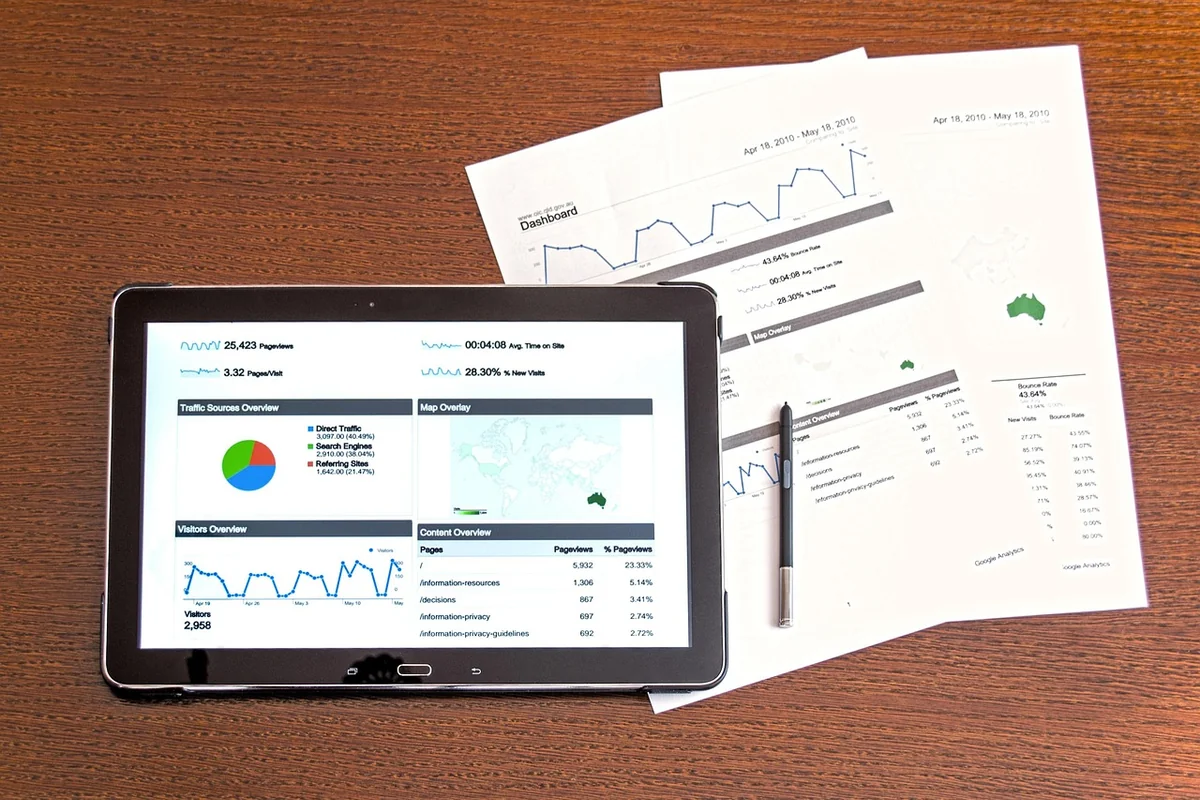
The 3 Metrics That Actually Matter for Small Businesses
1. Lead Generation Rate: Of the people visiting your key pages (services, contact), what percentage become a lead (email sign-up, contact form submission)? Track this in Google Analytics 4 (free). Aim to improve this number through better page copy and clearer calls-to-action.
2. Email List Growth & Engagement: Track your monthly net new subscribers. More importantly, track your open rate (industry avg. is ~20%) and click-through rate. If these are low, your content isn't resonating.
3. Cost Per Acquisition (CPA): If you spend $100 on a Facebook ad campaign that generates 5 qualified leads, your CPA is $20. Is that less than the lifetime value of a customer? If yes, scale. If no, rethink.
Your 2026 Free Tool Stack for Measurement
You do not need expensive software.
- Google Analytics 4 & Search Console: For traffic, behavior, and search performance. Non-negotiable.
- Hotjar (Free Plan): For session recordings and heatmaps to see how people use your site. Invaluable.
- Spreadsheets (Google Sheets/Excel): The ultimate flexible tool. Create a simple dashboard to track your 3 key metrics weekly.
Putting It All Into Practice: Your 90-Day Plan
Feeling inspired but paralyzed by where to start? Let's condense this into a blunt, 90-day action plan. This is the exact framework I give to new coaching clients.
Weeks 1-4: Foundation & Audit. Don't create anything new. Audit your existing digital presence. Set up Google Analytics 4 if you haven't. Clean up your website's top 5 service/product pages with the SEO checklist. Choose your one primary marketing channel. Create one specific lead magnet and add a sign-up form to your site.
Weeks 5-8: First Content Cycle. Create your Q1 "hero" content piece based on the most common question your customers ask. Begin the repurposing engine: schedule 2 social posts per week derived from it. Send your first two emails to your list (a welcome sequence for new subscribers and one tip from your hero content). Start the 20-minute daily engagement habit on your chosen social platform.
Weeks 9-12: Refinement & Double-Down. Analyze your metrics. Which repurposed content got the most engagement? Which email subject line got the highest open rate? Double down on what's working. Adjust one thing that's not. By now, you should see a trickle of leads from organic search or your email list. Your goal isn't massive scale; it's proving a repeatable system.
The biggest trap is trying to execute all six strategies at full volume on day one. You'll fail. Pick one section of this guide—maybe SEO, maybe email—and implement just that for one quarter. Get it working. See the results. Then, and only then, layer in the next piece. Marketing on a budget is a marathon of consistent, small, smart actions, not a sprint of frantic spending.
Frequently Asked Questions
I have literally zero budget. Where should I absolutely start?
Start with Google Business Profile (it's free) and basic on-page SEO. Claim and completely optimize your Google Business Profile with photos, accurate info, and posts. Then, take your top service page and apply the 20-minute SEO checklist. These two things target high-intent local and search traffic with zero cash outlay. Your first $100 should go towards a professional-looking lead magnet design on Canva Pro or a year of a basic email service provider.
How much time should I realistically spend on this per week?
Be brutally realistic. If you're a solo founder, start with 5 focused hours per week. Block it out on your calendar. A sample split: 2 hours for content creation/repurposing, 1 hour for engagement and community interaction, 1 hour for email management, and 1 hour for measurement and planning. Consistency with 5 hours a week will beat 20 hours of frantic, unfocused effort once a month.
Is it worth spending money on social media ads with a small budget?
Only after you've nailed your organic foundation and have a proven, high-converting offer. Throwing $5 a day at a vague "brand awareness" campaign is a waste. If you do dip into ads, use a tiny budget ($100-200) for a highly targeted, direct-response campaign—like promoting your specific lead magnet to a very narrow audience. Treat it as a learning expense, not a growth lever, until your return is consistently positive.
What's the one tool you'd recommend paying for first?
An email marketing service provider (like MailerLite or ConvertKit). Your email list is an asset you own and control. Social media platforms are rented land. Investing in the tool that manages your owned audience provides the highest long-term security and ROI. The second paid tool would be a Canva Pro subscription for creating all your visual assets professionally.